Transition I–II
Foreground and background
Example nowSurrounding background
Next changeSpeaker 6

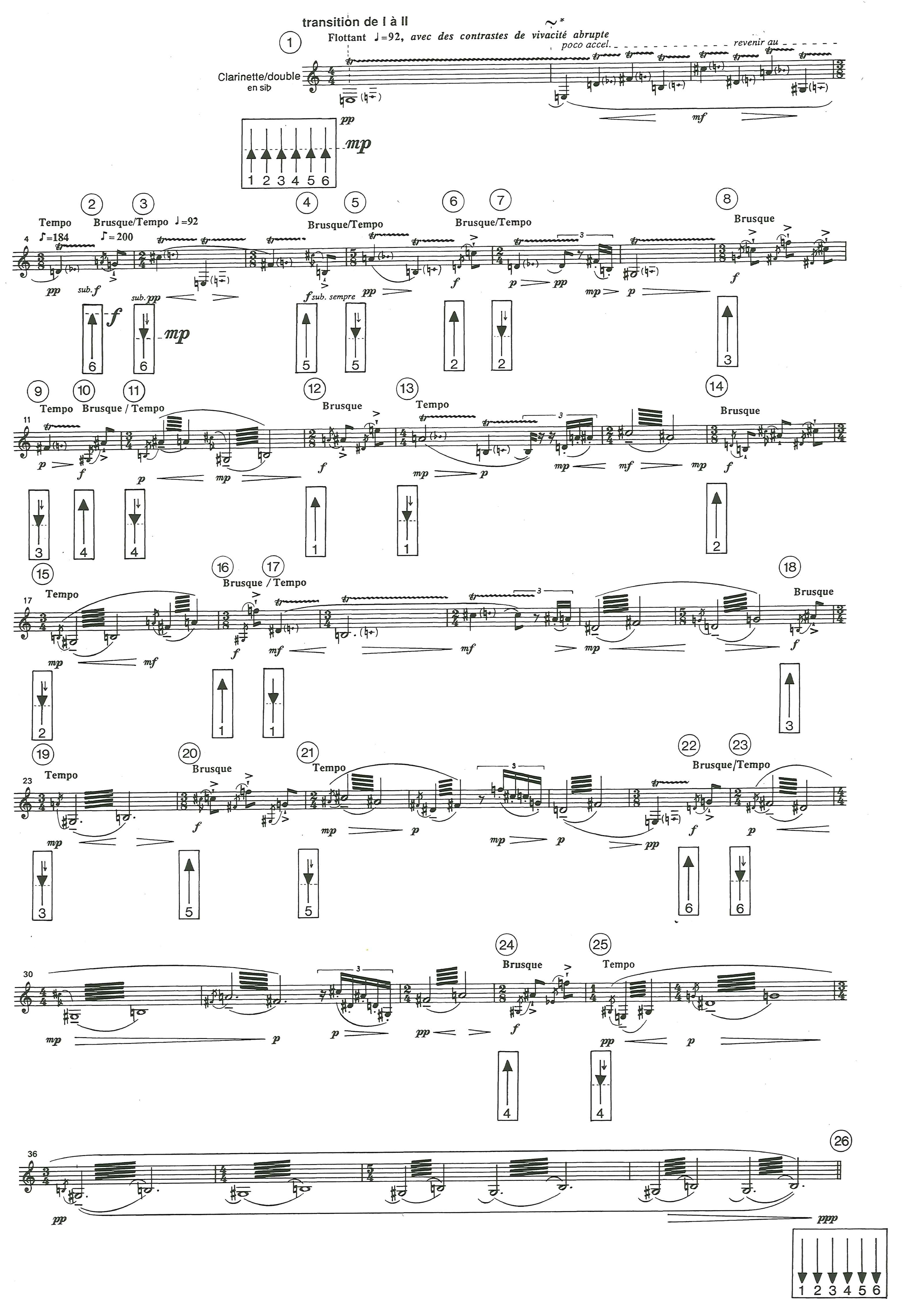
The cue guide follows the existing example timing. Exact alignment to the printed score is still under review; scroll the score at your own pace.
Background only · no speakers boosted
Hold 1–6 or a pad to boost. Release to fade back; the background keeps playing.
Tap the floor to move your listening point. Drag to rotate the view.
White marker: you · red marker: clarinetistGrey circles: volume · amber: brief accentsHold arrows to move or turn · Keyboard: W A S D, J / L · Esc to go back
Grey circles follow each speaker’s sound. Amber pulses show accents above the surrounding background.
Example mix · surrounding background
About this excerpt and preview
This study lets you listen to the example, change listening position, or perform the spatial mix yourself. Switching experiences keeps your place in the recording. Use headphones.
Transition I–II contrasts a quieter background on all six speakers with foreground gestures. Read Andrew Gerzso’s IRCAM analysis.
Preview 06 focuses on this one excerpt. It restores the earlier prototype’s paired accent and release timings; musical timing, score alignment, and asset credits still require final review. The position model is an educational approximation. Circles describe sound at the speakers; moving changes what you hear. In Mix, you control the sound; the visual guide does not change your mix. Use headphones to hear changes in direction. A boost raises that speaker from 0.5 to 1 gain (+6 dB); the other speakers keep playing. This does not double the overall perceived loudness. The recording’s own loud and quiet gestures remain audible even with no boosts selected.